
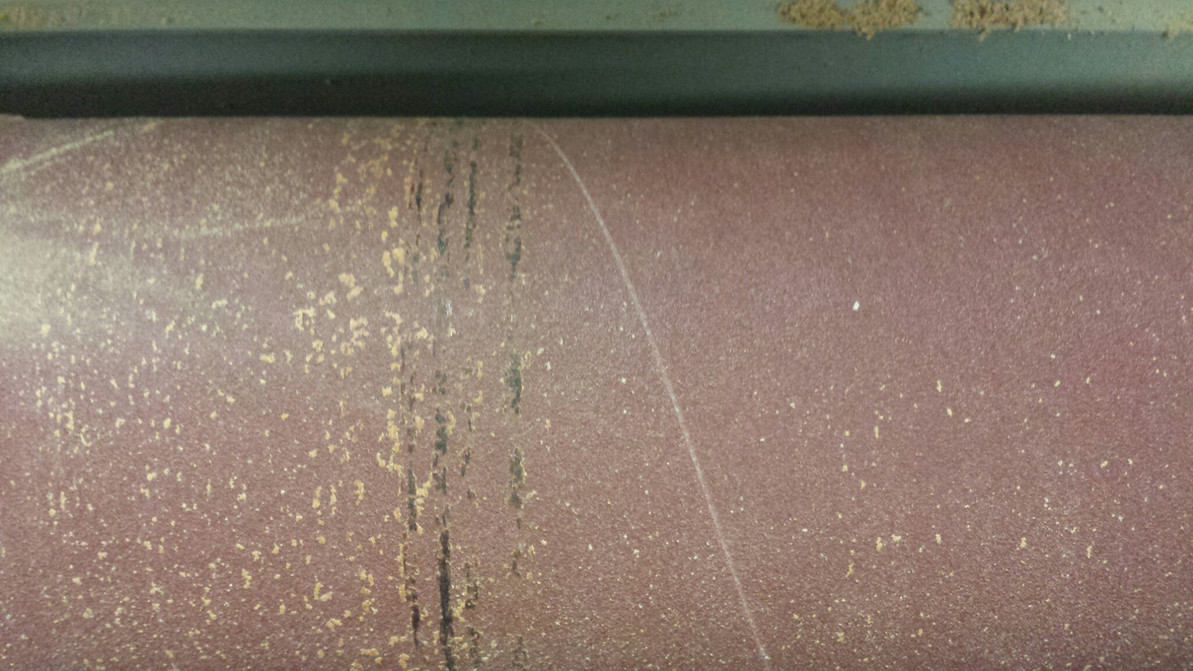
What drum sanding wrap should I use for Douglas Fir?
Hello! I am looking to buy an assortment of grits for my new Powermatic PM2244 drum sander. It takes 3” wide paper. Can you help me decide between aluminum oxide vs zirconia? My first project will be running 1000lf of Doug fir trim boards through it to get a finish ready surface, but u plan to use it for various hardwoods on other projects. I’d love to better understand the pros/cons of each option
Hey there! First off, congrats on the new Powermatic PM2244, that's a solid drum sander. Nothing beats feeding long runs of trim through one and watching it spit out flat, ready-to-finish boards... until you hit the part where the paper loads up, or the belt dies halfway through your 1000 linear feet of Douglas fir. Then, sanding suddenly reminds everyone why the old joke exists: it sucks, but it doesn't have to.
You've got the classic "which abrasive do I stock up on?" question, and you're smart to ask it before dropping cash on an assortment. Let's cut through the marketing fluff with some real-world shop talk.
Aluminum Oxide vs. Alumina Zirconia for Your Drum Sander
Both are excellent on wood, but they shine in different scenarios. Your first big job is Douglas fir (a softwood that can be resinous and sappy, especially in trim boards), followed by various hardwoods. That mix is key.
Aluminum Oxide (AO) The shop workhorse:
Pros: Affordable, available in the full grit range you’ll actually need (from aggressive 60-80 grit all the way up to 220+ for finish-ready surfaces). It cuts cleanly on both softwoods and hardwoods, produces a consistent scratch pattern, and is forgiving if you’re still dialing in your feed rate/speed on the PM2244. On Douglas fir, it handles the occasional pitch pocket without glazing over too quickly.
Cons: Wears faster under heavy stock removal or on really gnarly, figured hardwoods. You might go through more belts on a long run, like your 1000 linear feet, if the wood has varying density or sap.
Best for: Everyday mixed use, final smoothing, and when you want predictable results without breaking the bank. Great "all-rounder" for a new drum sander owner.
Alumina Zirconia (AZ) The tough guy:
Pros: Tougher grain that’s 1 time friable (breaks down to expose fresh, sharp edge), so it lasts noticeably longer on aggressive work, especially dimensioning or heavy leveling of raw boards. Many folks running drum sanders report AZ belts outlasting AO by a good margin on hardwoods and even on softwoods when you’re taking meaningful passes. It runs cooler and handles the abuse of high-volume work better. On hardwoods (maple, oak, cherry, etc.), it’s a beast for initial flattening, with less downtime changing belts.
Cons: Usually more expensive per belt/roll. Available grits tend to be coarser (great for the 36-120 range, not optimal in very fine grits). On pure softwoods like Douglas fir, it can sometimes be overkill; you might not get the full longevity benefit, and the cut can feel more aggressive (which is good for stock removal but can leave deeper scratches if you’re not careful with your sequence). Not as "smooth finishing" oriented as AO in higher grits.
Best for: Heavy initial passes, lots of hardwood work, or when you hate stopping to change belts mid-project.
My Recommendation for You
For your specific situation (1000 linear feet of Douglas fir first, then mixed hardwoods ongoing):
Start with a solid Aluminum Oxide assortment as your main stock. It’s the safer, more versatile choice for a drum sander where you’ll be doing everything from leveling to finish prep. Get a good range: 100 or 120 grit for the bulk of the Doug fir work (it’ll remove mill marks and get you close without tearing up soft grain), then step up to 180 for that true "finish-ready" surface. Don’t skip more than one grit in the sequence; that old myth of jumping straight from 80 to 220 to "save time" just buries deep scratches that show up under finish later. Sanding sucks enough without extra rework.
If your budget allows, add some Alumina Zirconia wraps in the coarser grits (say 60-80-100) for the heavy lifting on harder woods or any future resawing/planer-snipe cleanup. Many drum sander users find AZ pays for itself on volume hardwood runs because you change belts less often. But for straight Douglas fir trim? AO will do the job cleanly and cost-effectively.
Pro tip on the PM2244: 3" wide rolls or pre-cut wraps are available, but can be more costly over time. Instead, go for bulk rolls of 18 or 50 meters in the most-used grits, and cut your own wraps. The CS311 from Klingspor is the magic sauce (not sponsored) for drum sanders. It has extra-long aluminum oxide abrasive grains that last longer than any other AO on the market. It has a special coating over the grains to reduce loading and heat buildup.
Always keep a cleaning stick handy https://www.woodworkingshop.com/product/BS99801. Use the cleaning stick while the drum is hot and NOT after it's cooled down. Because the resins will harden if left overnight lying on the belt, a glazed belt is the fastest way to turn a great machine into a frustration.
Suggested Starter Assortment (Grit Sequence Wisdom)
Coarse (initial leveling on Doug fir/rough hardwoods): 80 grit (AO primary, AZ option for tough spots) https://www.woodworkingshop.com/product/PE40280 or
100 in AO: https://www.woodworkingshop.com/product/PE11448
Medium (main work): 120 grit https://www.woodworkingshop.com/product/PE09361
Fine (smoothing): 180 grit https://www.woodworkingshop.com/product/PE09363
Finish-ready: 220-grit random-orbit discs may be used for a final smoothing pass, but you should be ready at 180 grit.
Recent Posts
-
What drum sanding wrap should I use for Douglas Fir?
Hello! I am looking to buy an assortment of grits for my new Powermatic PM2244 drum sander. It takes …Apr 3rd 2026 -

Burning Post #7
Hello Pyrographers! Time to try something new…Burning on Paper!Included in this …Dec 15th 2025 -

Klingspor's 2025 Holiday Gift Blitz: Top Buzzworthy Picks for Woodworkers
December 2025's hottest woodworking gifts are flying off the shelves at Klingspor's. Reddit raves pr …Dec 8th 2025