Workshop Wound Care
- SKU:
- LAP97133
- MPN:
- BK-WOUND
- Shipping:
- Calculated at Checkout




Description
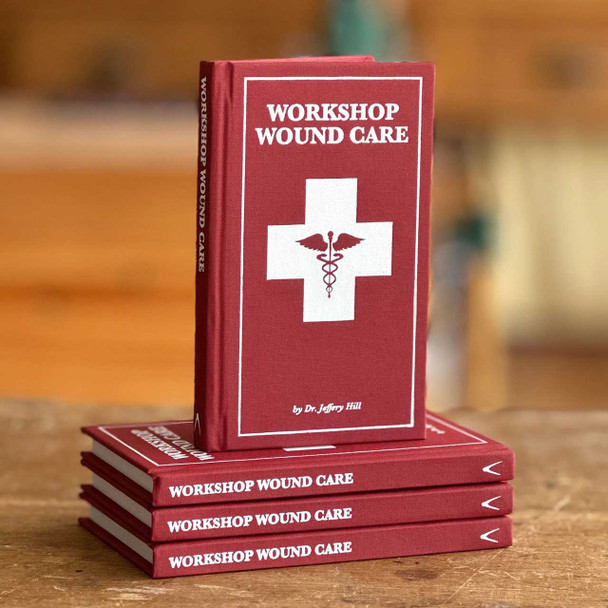
Workshop Wound Care
Workshop Wound Care – part of our pocket-book series – goes straight to the essential information you need to handle common workshop injuries, from lacerations and puncture wounds to getting materials in your eye.
The author, Dr. Jeffery Hill, is an emergency room physician and an avid woodworker. He understands precisely what a woodworker needs to know about injuries and presents the information in a way that non-medical professionals can easily grasp.
This book is definitely a practical guide rather than a medical textbook. It is organized so you can quickly find the information you need, allowing you to turn directly to the appropriate instructions when you cut, burn, or crush yourself.
We were surprised by how much we learned about wound care while editing this book. We have set aside our coagulant dressings and hydrogen peroxide, opting instead for Dr. Hill’s recommended methods for dressing wounds to help them heal more quickly.
Another pleasant surprise: the first aid supplies you need are not exotic or expensive. Dr. Hill suggests items that can be easily obtained at a good pharmacy or online. As a result, we have upgraded our shop's first aid kit to align with his recommendations. This process has brought us a sense of relief, as off-the-shelf first-aid kits can be hit or miss when it comes to what you really need for the workshop. After reading the book, we feel prepared for almost any situation.
With the help of Workshop Wound Care, when (not “if”) you injure yourself, you’ll be back at the workbench in the shortest time possible and with minimal discomfort.
Like all books published by Lost Art Press, Workshop Wound Care is produced and printed entirely in the United States. This 184-page book is hardbound, measuring 4" x 6-1/2", and printed on bright #70 paper. The pages are sewn and reinforced with fiber tape, ensuring that the binding will last for generations.
Table of Contents
Chapter 1: Introduction
A practical guide for assessing and managing wounds in a woodshop. In this guide, you will learn about anatomy, wound healing, and the pathophysiology of various types of wounds. Additionally, you'll discover how to stop bleeding, properly dress wounds, and, in the unfortunate event of an amputation, how to store and transport an amputated fingertip for potential re-implantation safely.
Chapter 2: Build a Proper First Aid Kit
Standard first aid kits purchased over the counter usually contain useful items, but they often lack proper quantities or quality. Here, you will learn what you really need.
Chapter 3: How to Stop Bleeding
Controlling the flow of blood from an open wound is crucial, yet it is often done incorrectly. This guide will teach you the correct methods to stop bleeding from various types of wounds.
Chapter 4: Wound Healing Primer
The process of wound healing involves complex biochemical reactions; understanding what occurs at the cellular level can provide valuable insights into the expected course of healing.
Chapter 5: Anatomy Primer
Understanding the anatomy of commonly injured body parts can help you assess the severity of a wound; in this workshop, the focus will primarily be on the hand and face.
Chapter 6: Red Flags
Determining when to seek medical care after an injury depends on the situation. Still, certain factors definitely require attention from a healthcare provider, such as loss of function, neuromuscular issues, poor wound healing, or cosmetic concerns.
Chapter 7: Tetanus is a Bad Way to Die
Understand the risks of tetanus based on exposure type and immunization status, along with a brief overview of what tetanus is and how infections occur.
Chapter 8: Early Wound Care Principles
Proper early wound care, especially effective irrigation, is crucial for reducing the risk of infection. Familiarize yourself with irrigation techniques supported by evidence that best prevent infections.
Chapter 9: Wound Dressings
Whether you are at a shop or a doctor’s office, knowing how to dress a wound properly is essential for creating a clean and appropriately moist healing environment. This guide focuses on the care of wounds that have been sutured, taped, or glued, as well as bandaging techniques to achieve secure dressings.
Chapter 10: So You Cut Your ____ Off? Now What?
Get clear instructions on how to properly store an amputated body part for possible reattachment, as well as immediate care and common treatment for amputations.
Chapter 11: Lacerations
The initial care and triage of lacerations, a common injury in workshops, depend on the type of wound and the cause of the tissue injury. Clean cuts from knives and chisels are generally easier to manage than injuries involving tissue loss caused by power tools.
Chapter 12: Crush Injuries
A misplaced hammer blow or a dropped workpiece can crush tissues and possibly break bones. It is important to learn general triage and the pathophysiology of these injuries, with a special focus on subungual hematomas (bleeding or bruising under the nails).
Chapter 13: Puncture Wounds
Puncture wounds may seem harmless, but they carry a significant risk of infection. When triaging these wounds, it's important to consider the location of the injury, the object that caused the puncture, and the cleanliness of both your skin and the object involved. This chapter also discusses the management of splinters.
Chapter 14: High-pressure Injection Injuries
This type of puncture wound may initially appear minor; however, it can be devastating due to extensive tissue loss from necrosis that develops within hours and days.
Chapter 15: Eye Injuries
The eye requires special attention due to the risk of permanent vision loss from certain injuries. In this section, you will learn about corneal abrasions, foreign bodies (both metal and organic), and puncture wounds or open globe injuries.
Related Products

Best Workshops
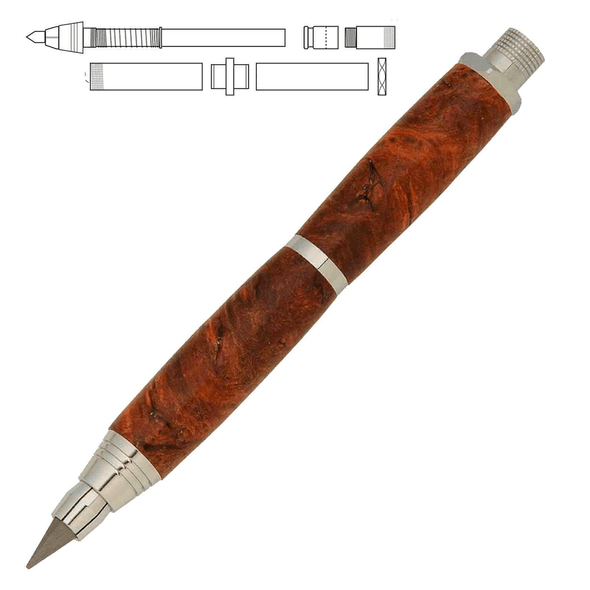
Sketch Pencil Workshop Chrome

Sketch Pencil Workshop Leads 3pk

Sketch Pencil Workshop Bushing Set