
Ingenious Mechanicks
- SKU:
- LAP70275
- MPN:
- BK-INGENIOUS
- Shipping:
- Calculated at Checkout



Description
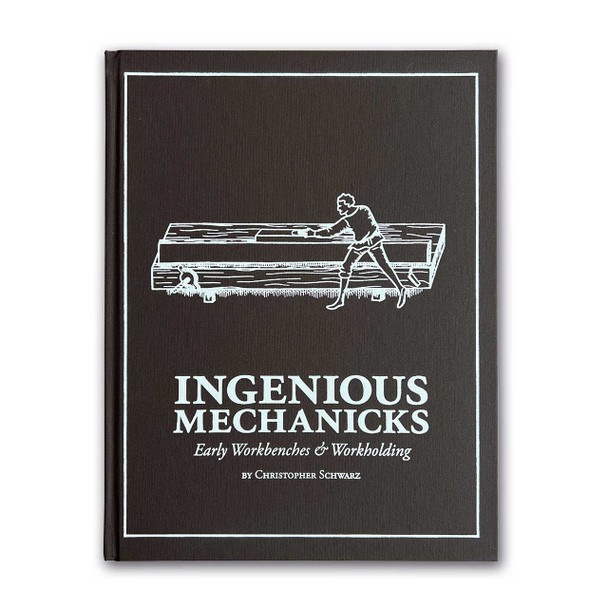
Ingenious Mechanicks
For over 2,000 years, woodworkers made complex and beautiful furniture using simple benches that used pegs, wedges, and their own bodies to hold the work. Workbenches with screw-driven vises only came along more recently.
It’s easy to think these old benches are outdated, but really, they’re just misunderstood.
For three years, Christopher Schwarz built these old-style workbenches and used them in his shop to make all kinds of furniture. Since there are no old instruction manuals left, he turned to hundreds of historical paintings for hints about how the benches were used. He then copied the tools and techniques from the paintings to test if they really worked.
This book takes you on a journey into the past, starting in Pompeii with the oldest known image of a Western bench. It then visits a Roman fort in Germany to look at the oldest surviving workbench, and finally arrives at the author’s shop in Kentucky, where he rebuilt three historical benches and many early jigs.
These early benches offer several benefits:
- They cost less to make.
- You can build them in just a few days.
- They require fewer materials.
- You can even sit while using them.
- They take up less space than modern benches and can double as seating in your home.
- Sometimes, they even work better than modern vises or shavehorses.
Even if you don’t plan to build an early workbench, “Ingenious Mechanicks” shares old ideas you can use on your modern bench. For example, you can make a versatile shaving station with just four small pieces of wood. You can build a strong face vise with a notch and some softwood wedges. Or you can create a great planing stop using a stick of oak and a few rusty nails.
“Ingenious Mechanicks” measures 8-1/2 by 11 inches, has 160 pages, and is printed in full color on high-quality coated paper. The binding is sewn for durability, and the pages are protected by sturdy hardbound boards covered in cotton cloth. Like all Lost Art Press books, it is made and printed entirely in the United States.
Contents
Introduction VII
1: Why Early Workbenches?
2: Workbenches Old & Modern
3: The Pleasures & Problems with Paintings
4: Workbenches: Where, When & Why
5: Early Workholding Devices
6: Herculaneum Workbench
7: Sallburg Workbench
8: 'Auf Wiedersehen' to Your Dollars
9: Holy Roman Workbench
10: 'Experto Crede'
Acknowledgements 147
Index 149
About the Author
Christopher Schwarz is a furniture maker, writer, and teacher. He co-founded Lost Art Press and also helped start Crucible Tool.